Difference Between CIBIL Score and Credit Score Explained Simply
What Is the Difference Between CIBIL Score and Credit Score?
When my initial loan application was refused, the lender informed me that my CIBIL score was low. A few weeks later, another lender brought up my credit score. I recall feeling perplexed and little ashamed since I assumed they were the same thing. That perplexity prompted me to delve deeper. Everything became clear after I learned the distinction between a CIBIL score and a credit score.
If you’ve ever felt perplexed by these terminology, you’re not alone. This tutorial discusses the distinction in a straightforward, practical manner.
What is a credit score?
A credit score is a three-digit number that indicates how responsibly you handle borrowed funds.
In simpler terms:
• It displays your payment behavior.
• Demonstrates your credit risk to lenders.
• Assists banks with loan approval.
Understanding credit score fundamentals is essential for understanding the distinction between CIBIL score and credit score.
What is the CIBIL Score?
A CIBIL score is a sort of credit score that is supplied by TransUnion CIBIL, one of India’s credit agencies.
Important Points:
• It is commonly used in India.
• Many banks refer to it first.
• The calculation is based on your credit data.
So, while every CIBIL score is a credit score, not all credit scores are CIBIL scores.
A Simple Way to Understand the Difference
Think of it this way:
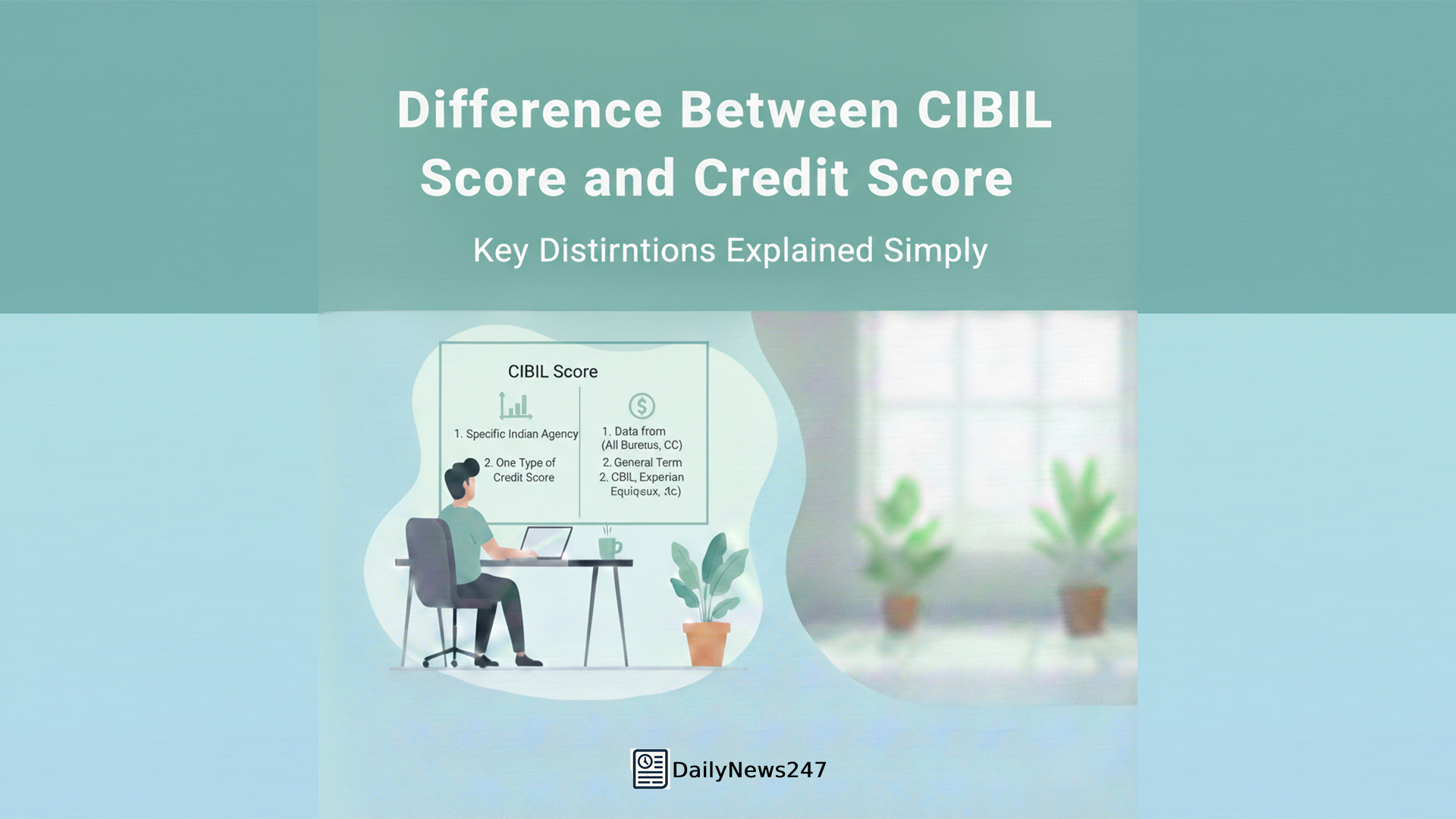
• Credit score is a broad phrase.
• The CIBIL score is a specific type of credit score.
This explanation alone clears up the majority of misconceptions about the distinction between a CIBIL score and a credit score.
Who provides credit scores in India?
India has several credit bureaus.
Major ones include:
• TransUnion CIBIL.
• Experian India
• Equifax India.
• High CRIF rating.
Each bureau generates its own credit score using comparable but somewhat different processes.
Why is CIBIL Score more popular in India?
CIBIL score gained popularity because:
• This was one of the first bureaus.
• Banks have largely implemented it.
• Loan systems have a tight integration.
That is why many people believe the CIBIL and credit scores are the same.
Credit Score vs. CIBIL Score Range
Both frequently fall into a similar range.
General understanding:
• A higher credit score indicates better credit behavior.
• Lower scores indicate increased risk.
The interpretations are similar, but the data sources differ.
My Personal Experience with This Confusion
After my loan rejection, I checked my credit score from two platforms. One showed a slightly different number than my CIBIL score. Initially, I panicked. Later, I realized both scores were correct, just calculated by different bureaus. That moment taught me why understanding the difference between CIBIL score and credit score matters. It prevents unnecessary stress.
How are both scores calculated?
Both scores are computed with:
• Payment history.
• Credit use.
• Length of credit history.
• Types of credit.
• Recent loan requests.
Weightage may vary significantly across bureaus.
Does the difference in score matter?
Small variances are usual.
What matters most:
• Overall credit behavior.
• Consistent repayments.
• Responsible credit usage.
Lenders frequently consider patterns rather than individual numbers.
What Score Do Banks Actually Use?
Banks may
• Prefer a CIBIL score.
• Check several credit scores.
• Conduct internal risk assessments.
This depends on the lender’s policies.
Credit Score vs. CIBIL Score For Loans
For loans:
• Both scores important.
• Typically, CIBIL scores are reviewed first.
• Additional scores support the judgment.
Understanding the distinction between a CIBIL score and a credit score allows you to better prepare.
Credit Score Versus CIBIL Score for Credit Cards
For credit cards:
• Issuers may check several bureaus.
• Spending habit is more important.
• Timely payment is vital.
Credit cards have a direct impact on both scores.
Common Misconceptions People Have
Many individuals believe:
• Only the CIBIL score matters.
• One low score leads to rejection elsewhere.
• Checking the score diminishes it.
These ideas are inaccurate and frequently destructive.
How often are these scores updated?
Scores update when:
• Banks report statistics.
• Payments were made.
• New credit is obtained.
Updates are continuous rather than scheduled.
Should you keep track of both scores?
Yes, it’s beneficial.
Tracking helps:
• Identify mistakes early.
• Understand disparities.
• Maintain financial awareness.
Knowledge increases control.
Difference Between CIBIL Score and Credit Score in One Line
• Credit score is a general financial measure
• CIBIL score is a specific credit score by CIBIL
This is the simplest explanation of the difference between CIBIL score and credit score.
Why Beginners Should Understand This Difference.
For Beginners:
• It reduces misunderstanding during loan applications.
• It boosts financial confidence.
• It enhances decision-making.
Early comprehension prevents future problems.
How To Improve Both Scores Together
Good behaviors boost all scores:
• Pay on time.
• Minimize credit use
• Avoid unwanted loan inquiries.
• Monitor reports on a regular basis.
Consistency works everywhere.
FAQs – CIBIL Score vs Credit Score
- Is CIBIL score the same as credit score?
No. CIBIL score is one type of credit score.
- Which score is more important in India?
CIBIL score is widely used, but other credit scores also matter.
- Can I have different credit scores?
Yes, different bureaus may show slightly different scores.
Also Read –
Saving vs Investing: The Brutal Truth About Which One Makes You Rich
Why Saving Money Daily Matters | Smart Financial Habits Guide
How to Manage Money for Beginners: Simple Steps to Control Your Finances
What Is Personal Finance? A Simple Beginner Guide to Manage Money
Share this content:











Post Comment