How NEFT, RTGS & IMPS Work: Simple Banking Transfers Explained
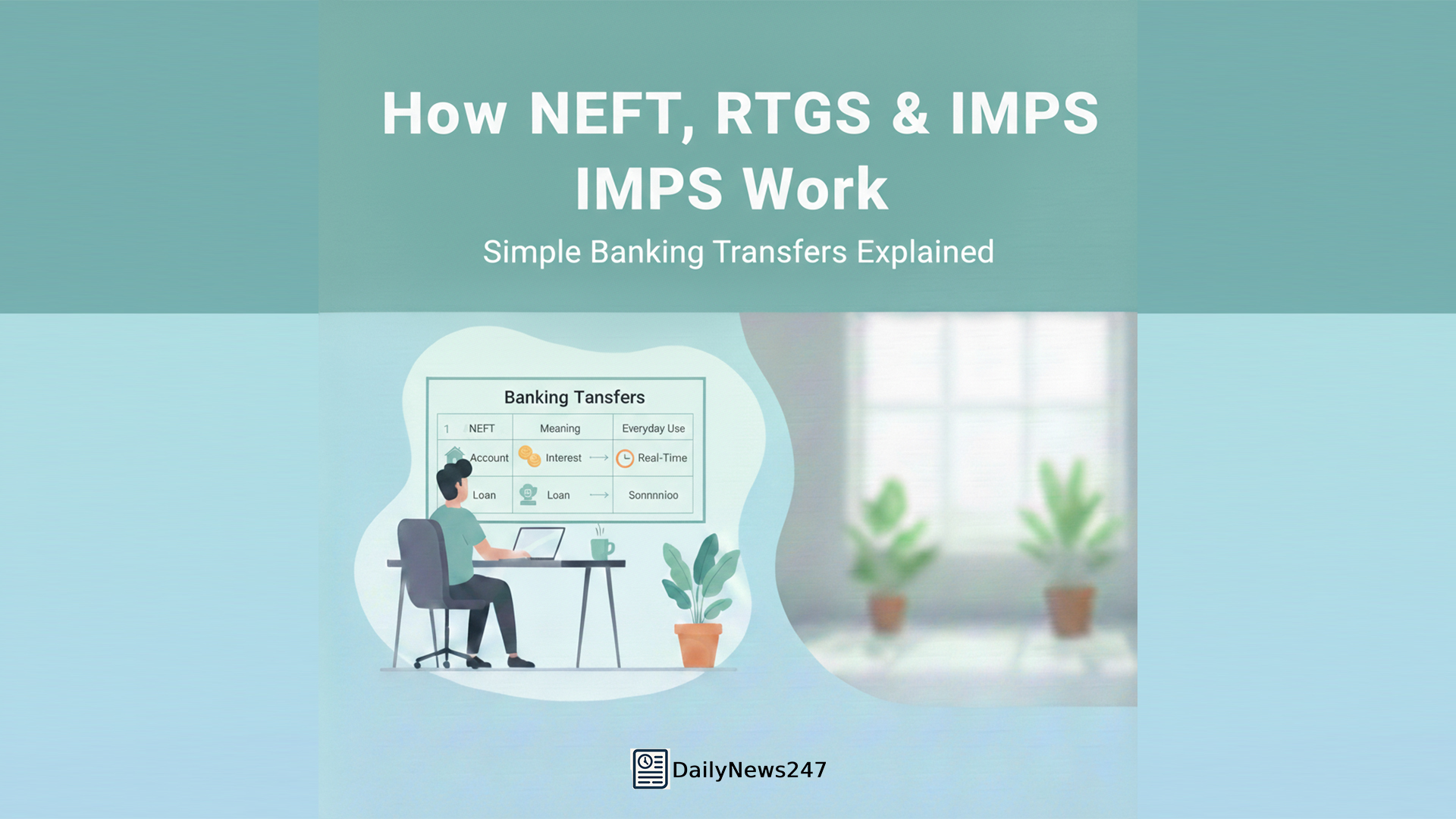
How NEFT, RTGS, and IMPS Work
I recall gazing at three perplexing options when I first transferred money online: NEFT, RTGS, and IMPS. I didn’t know which one to chose. I clicked at random, praying the money would arrive securely. It did, but the doubt stuck with me. Later, when a payment was delayed, I determined to learn how NEFT, RTGS, and IMPS work. That tiny effort spared me from making many future blunders.
This article discusses these three financial transfer procedures in simple terms and with real-world examples.
What Are NEFT, RTGS, and IMPS?
NEFT, RTGS, and IMPS are electronic money transfer systems used by banks.
They allow you to:
- Send money from one bank account to another
- Transfer funds without cash
- Use online or mobile banking
Understanding how NEFT, RTGS & IMPS work helps you choose the right option every time.
Why do banks provide several transfer methods?
Each transfer system is designed to serve a unique function.
Banks provide several alternatives to:
• Manage various transaction sizes.
• Optimize speed and security.
• Reduce system overload.
One strategy does not work in all instances.
What Is NEFT?
NEFT stands for National Electronic Funds Transfer.
It is commonly used for:
- Regular money transfers
- Non-urgent payments
- Medium-value transactions
NEFT is reliable but not instant.
How NEFT Works
NEFT operates on a batch processing system.
This means:
• Transactions are handled at set intervals.
• Money does not transfer promptly.
• Funds normally arrive within a few hours.
NEFT is appropriate when the time is flexible.
What is RTGS?
RTGS stands for Real-Time Gross Settlement.
It is mostly used for:
• Large-value transactions.
• Urgent payment.
• Fast and direct business transfers with RTGS.
How Does RTGS Work?
RTGS operates in real time.
This means:
• Transactions are processed individually.
• Money transfers promptly.
• \tNo need for waiting or batching. • \tRTGS is perfect for fast transferring huge numbers.
What Is IMPS?
IMPS stands for Immediate Payment Service.
It is designed for:
- Instant transfers
- Small to medium amounts
- 24/7 availability
IMPS is the most flexible option for daily use.
How IMPS Works
IMPS processes transfers instantly, even at night or on holidays.
Key features:
- Real-time transfer
- Works anytime
- Immediate confirmation
This speed makes IMPS popular for urgent personal payments.
Simple Comparison: NEFT vs RTGS vs IMPS
Understanding how NEFT, RTGS & IMPS work becomes easier when compared simply.
NEFT:
- Not instant
- No minimum amount
- Best for planned payments
RTGS:
- Instant
- High minimum amount
- Best for large transfers
IMPS:
- Instant
- Lower limits
- Best for everyday use
Each has its place.
My Personal Experience with These Transfers
Once, I used NEFT to send money for an urgent payment, assuming it would be instant. The money reached hours later, causing unnecessary stress. After that, I used IMPS for urgent needs and RTGS for high-value payments. That experience taught me the real importance of understanding how NEFT, RTGS & IMPS work, not just knowing their names.
Transaction Limits Explained Simply
Each method has limits.
NEFT:
- No minimum limit
- Maximum depends on bank
RTGS:
- Minimum amount required
- Usually no maximum limit
IMPS:
- Lower daily limits
- Varies by bank
Limits help banks manage risk and security.
Charges for NEFT, RTGS & IMPS
Charges depend on bank policy.
General idea:
- NEFT: Low or free
- RTGS: Higher for large transfers
- IMPS: Small charges per transaction
Many banks now offer free digital transfers.
When Should You Use NEFT?
Use NEFT when:
- Payment is not urgent
- Amount is moderate
- You want low cost
NEFT is dependable and widely accepted.
When Should You Use RTGS?
Use RTGS when:
- Amount is large
- Payment is time-critical
- Business or property transactions are involved
RTGS offers speed with security.
When Should You Use IMPS?
Use IMPS when:
- Money is needed instantly
- Small or medium amount
- Any time of day
IMPS is perfect for emergencies.
Safety of NEFT, RTGS & IMPS
All three methods are:
- Regulated by banks
- Encrypted and secure
- Traceable
Errors usually occur due to incorrect details, not system failure.
Common Mistakes People Make
People often:
- Choose wrong transfer method
- Enter incorrect account details
- Expect NEFT to be instant
Understanding basics prevents these mistakes.
Why Beginners Must Learn These Transfers
Knowing how NEFT, RTGS & IMPS work helps:
- Avoid delays
- Reduce stress
- Make confident banking decisions
This knowledge is practical, not technical.
FAQs – NEFT, RTGS & IMPS
- Is IMPS faster than NEFT?
Yes, IMPS is instant, while NEFT works in batches.
- Can I use RTGS for small amounts?
Usually no, RTGS has a minimum amount requirement.
- Are NEFT, RTGS & IMPS available 24/7?
IMPS is always available. NEFT and RTGS depend on bank timings, though many banks now offer extended hours.
Share this content:











Post Comment