50-30-20 Rule Explained with Examples: A Simple Budgeting Method
The 50-30-20 Rule Explained with Examples
When I first started earning money, budgeting seemed complicated. I attempted to save whatever remained at the end of the month, but there was rarely anything left. One day, while speaking with a senior coworker, I learned of a simple budgeting technique. That was my first introduction to the 50-30-20 rule. It seemed too easy to work, but when I tried it, things gradually began to make sense.
In this article, the 50-30-20 rule is described with examples to help you understand how it works and how to use it in real life.
What Is the 50-30-20 Rule?
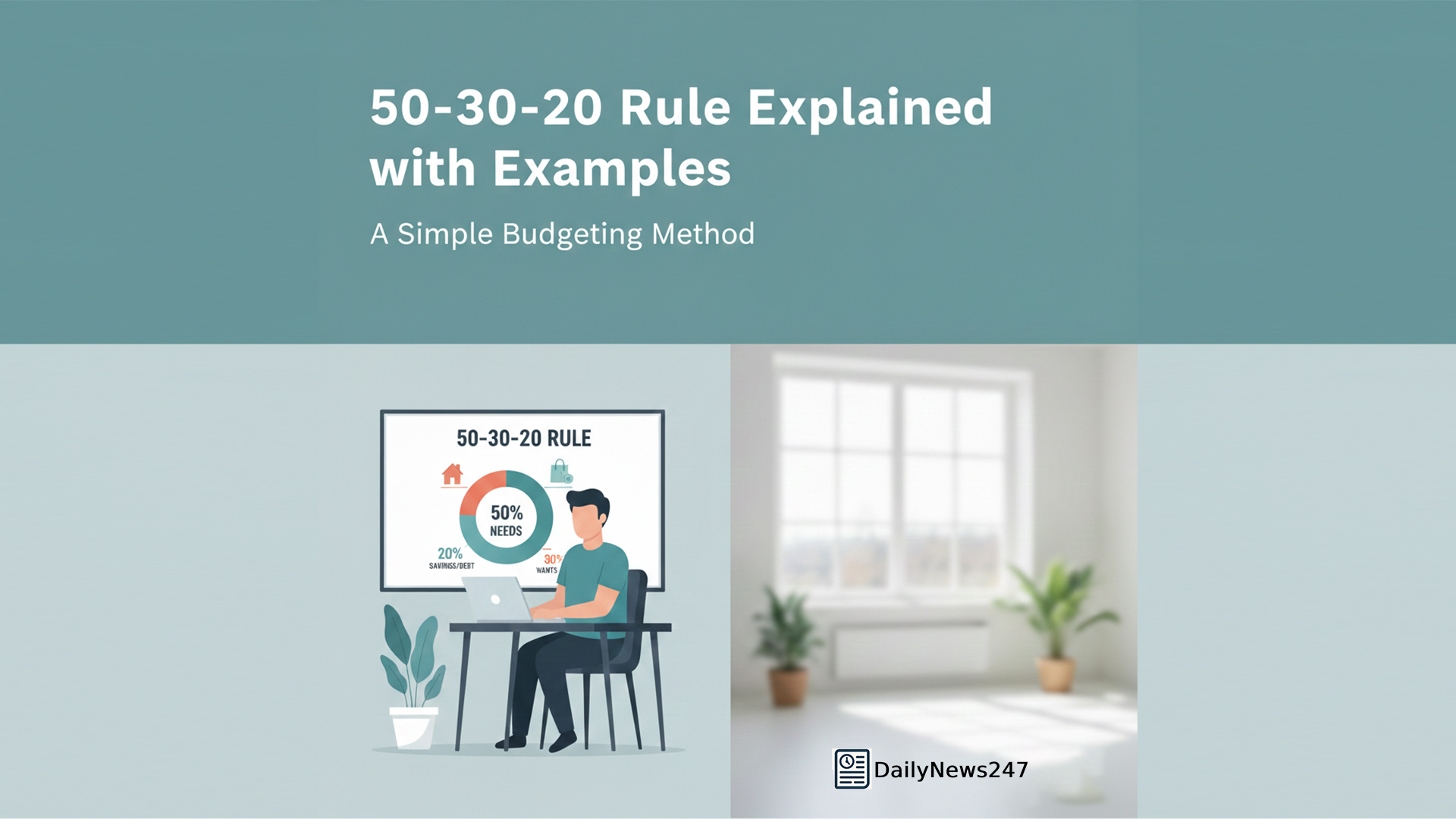
The 50-30-20 rule is a simple money management formula. It divides your monthly income into three clear parts:
- 50% for needs
- 30% for wants
- 20% for savings
This rule does not require advanced calculations. It is easy to follow, especially for beginners.
Why is the 50-30-20 rule popular?
People appreciate this regulation because it is clear.
It helps you:
- Spend without guilt.
- Save with discipline.
- Avoid financial turmoil.
When the 50-30-20 rule, as illustrated with examples, is fully understood, budgeting becomes less stressful and more realistic.
Understanding the 50% Needs Category.
Needs are costs that cannot be avoided.
This includes:
- Rent or house loan?
- Electric and water bills
- Groceries
- Transportation expenses.
- Basic Insurance
The goal is to keep all critical costs to 50% of your income.
Example of 50% Needs.
Assume your monthly income is ₹40,000.
50% of ₹40,000 = ₹20,000
The ₹20,000 budget should cover:
- ₹10,000 rent
- ₹5,000 groceries.
- ₹3,000 transportation cost
- ₹2,000 utilities.
This example demonstrates how the rule provides structure rather than guessing.
Understanding the 30% Wants category.
Wants are costs that improve your living but are not necessary for survival.
Examples:
- Eating Out
- Shopping Subscriptions
- Movies and Travel
- Gadgets
Wants make life more joyful, but without limitations, they silently deplete savings.
Example of 30% Wants.
Assuming the same income of ₹40,000:
30% of ₹40,000 = ₹12,000
This sum may be used for:
- ₹4,000 for dining out.
- ₹3,000 shopping
- ₹2,000 subscriptions
- ₹3,000 for leisure or hobbies.
The 50-30-20 rule, shown with instances, demonstrates that enjoyment is permitted but restricted.
Understanding the 20 percent savings category
Savings are the most undervalued source of income.
Savings include:
- Emergency fund
- Fixed deposits.
- Mutual funds
- Retirement Savings
This category safeguards your future.
Example of 20% Savings
From a ₹40,000 income:
20% of ₹40,000 = ₹8,000
This can be divided into:
- ₹4,000 emergency money.
- ₹2,500 for long-term savings.
- ₹ 1,500 investments.
When savings are prioritized first, financial discipline becomes automatic.
My Personal Experience With The 50-30-20 Rule
Initially, observing this guideline seemed limiting. I had to say no to impulse purchases and late-night food orders. But after three months, something unexpected occurred. I no longer felt stressed about money.
The rule did not make me wealthy, but it made me conscious. Awareness is powerful. That is why the 50-30-20 rule, as demonstrated with examples, is effective for actual people, not just textbooks.
Can everyone follow the 50-30-20 rule?
The rule is flexible, not strict.
If you have a low income:
- Needs may require more than 50 percent.
- Savings might start small.
If you have a large income:
- Savings can rise.
- Wants can still be restricted.
The regulation is a guideline, not a penalty.
Common Mistakes People Make Using This Rule
Many individuals don’t grasp the rule.
Common errors include:
- Treating wishes as needs.
- Ignoring savings while costs climb.
- Not altering percentages when income fluctuates.
Understanding the rationale is more important than accurate percentages.
How To Begin Using the 50-30-20 Rule
How to implement this rule:
- Calculate your monthly income.
- List all expenditures.
- Divide them into: necessities, wants, and savings.
- Adjust expenditure gradually.
- Review monthly.
Consistency is more important than perfection.
When the 50-30-20 Rule May Not Work.
This rule may seem difficult when:
- Income is irregular.
- Medical or familial emergencies occur.
- High debt exists.
Temporary changes are common in these situations.
FAQs – 50-30-20 Rule
1. Is the 50-30-20 rule good for beginners?
Yes, it is one of the easiest budgeting methods for beginners.
2. Can I change the percentages in the 50-30-20 rule?
Yes, the rule can be adjusted based on income and personal needs.
3. Does the 50-30-20 rule include investments?
Yes, investments usually fall under the 20% savings category.
Share this content:








Post Comment