Savings Account vs Current Account: Key Differences Explained Simply
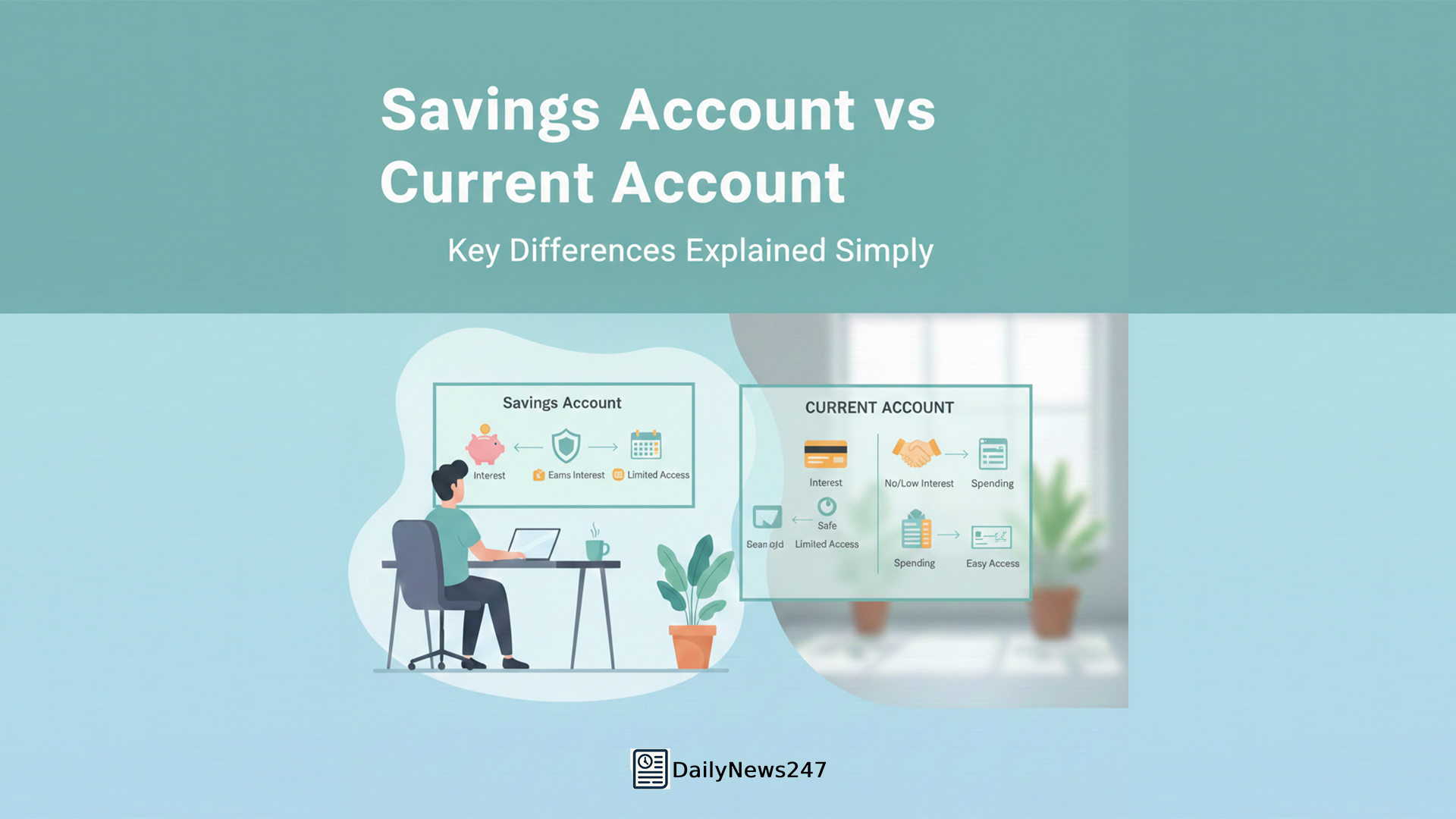
Savings Account vs Current Account
When I opened my first bank account, I didn’t even know there were different types. The bank staff handed me forms, I signed them, and that was it. Years later, when I started working with a small business owner, I heard him talk about his current account. That’s when I realized how little I understood about banking basics. Learning the difference between savings account vs current account helped me use money more wisely and avoid unnecessary confusion.
This article explains both accounts in simple language so beginners can clearly understand which one suits them.
What Is a Savings Account?
A savings account is a basic bank account meant for individuals to save money safely.
It allows you to:
- Deposit money
- Withdraw money when needed
- Earn interest on balance
Understanding savings account vs current account starts with knowing that savings accounts focus on personal money management.
What Is a Current Account?
A current account is designed mainly for businesses and professionals.
It is used for:
- Frequent transactions
- Business payments and receipts
- Managing cash flow
Current accounts usually do not earn interest but offer flexibility for large transactions.
Purpose of Savings Account vs Current Account
The main difference lies in usage.
Savings account:
- Personal use
- Encourages saving
- Limited transactions
Current account:
- Business use
- High transaction volume
- Focus on liquidity
This purpose difference defines everything else.
Interest Difference Between Savings and Current Account
Interest is a major factor in savings account vs current account comparison.
Savings account:
- Earns interest
- Interest calculated on balance
Current account:
- Usually no interest
- Focused on transactions, not savings
This makes savings accounts better for storing personal funds.
Transaction Limits Explained
Transaction limits matter more than people realize.
Savings account:
- Limited free transactions
- Withdrawal restrictions in some cases
Current account:
- Unlimited or high transaction limits
- Suitable for daily business payments
This difference protects savings discipline while supporting business needs.
Minimum Balance Requirement
Both accounts may have minimum balance rules.
Savings account:
- Lower minimum balance
- Some zero-balance options
Current account:
- Higher minimum balance
- Penalties if not maintained
Understanding this prevents unnecessary charges.
My Personal Experience with Both Accounts
I used my savings account for everything initially—salary, expenses, even freelance payments. Over time, tracking became messy. When I later started handling business-related payments, opening a current account brought clarity. Personal money stayed separate, and business transactions stopped interfering with my savings. That separation made finances feel calmer and more organized.
This practical experience helped me truly understand savings account vs current account beyond theory.
Who Should Open a Savings Account?
A savings account is ideal for:
- Salaried individuals
- Students
- Homemakers
- Beginners learning money management
It builds financial discipline slowly and safely.
Who Should Open a Current Account?
A current account suits:
- Business owners
- Freelancers with high transactions
- Traders and shop owners
- Professionals handling client payments
It supports operational flexibility rather than saving.
Savings Account vs Current Account: Key Differences Table (Explained)
Instead of numbers, focus on meaning:
- Savings account prioritizes security and growth
- Current account prioritizes movement and access
One protects money, the other keeps it flowing.
Common Mistakes People Make
Many beginners make avoidable mistakes:
- Using savings account for business
- Expecting interest from current account
- Ignoring transaction limits
- Mixing personal and business money
These mistakes create confusion and poor money tracking.
Can One Person Have Both Accounts?
Yes, and many people should.
Having both:
- Keeps finances organized
- Improves clarity
- Reduces accounting confusion
This is often the smartest approach.
How to Choose Between Savings Account vs Current Account
Ask yourself:
- Is the money for personal use or business?
- Do I need frequent transactions?
- Do I want interest on balance?
Your usage answers the question.
Why Understanding This Difference Matters
Knowing the difference between savings account vs current account helps you:
- Avoid bank charges
- Manage money efficiently
- Maintain financial clarity
Small knowledge prevents big problems.
FAQs – Savings Account vs Current Account
1. Can I earn interest on a current account?
Generally, no. Current accounts usually do not offer interest.
2. Is a savings account enough for small businesses?
For very small or occasional transactions, yes. For regular business activity, a current account is better.
3. Can I convert a savings account into a current account?
Banks usually require closing or opening a new account, not direct conversion.
Share this content:











Post Comment