Types of Bank Accounts in India
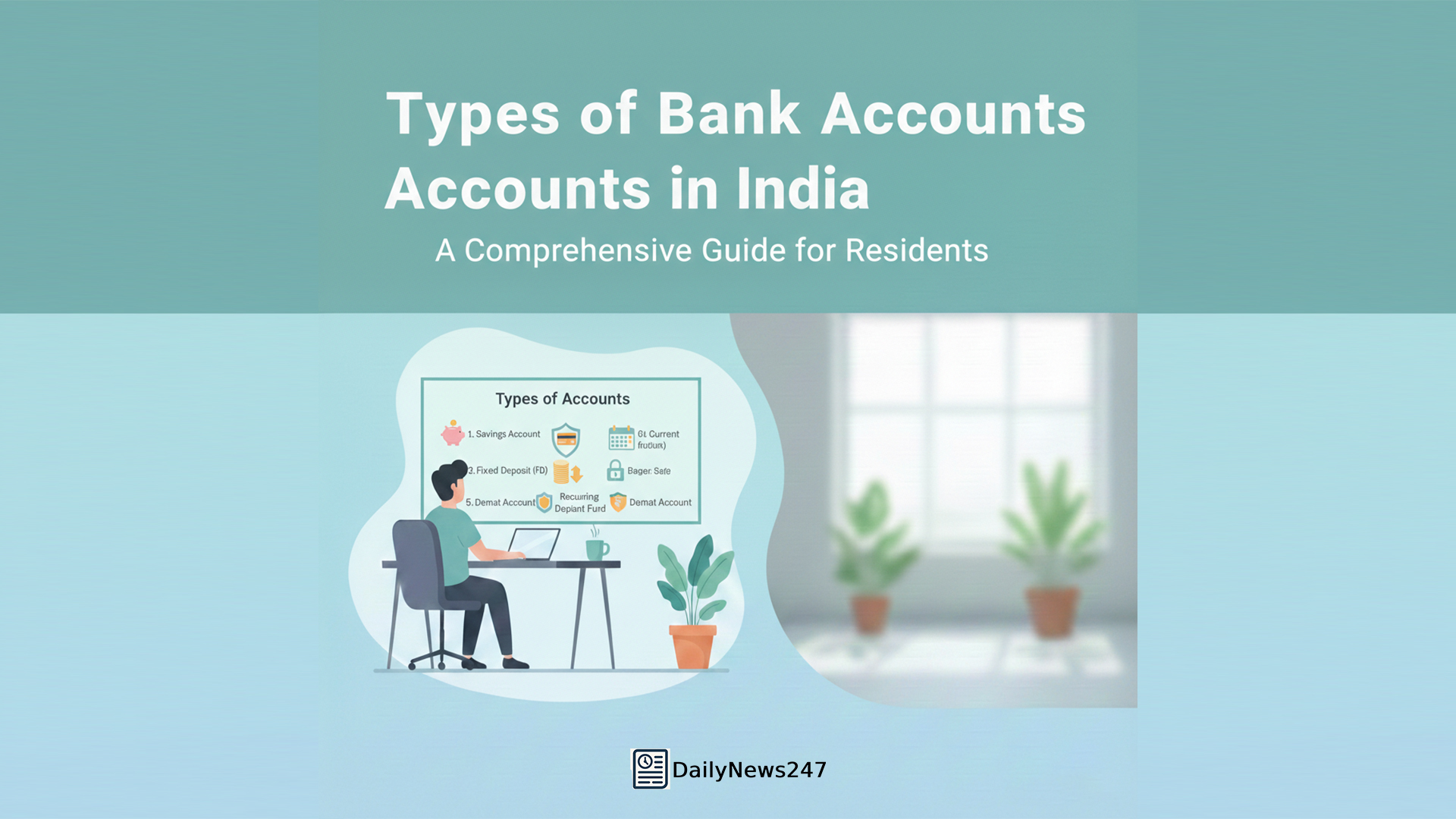
Types of Bank Accounts in India
Bank accounts are an essential aspect of our everyday financial lives. A bank account ties you to the official financial system, whether you work for a paycheck, own a business, save for the future, or get government benefits. In India, banks provide many sorts of accounts to meet a variety of demands. Choosing the correct one may help you better manage your finances, avoid needless fees, and possibly earn extra interest.
I’ll describe the many sorts of bank accounts in India in plain English, with brief explanations under each subject. I will also provide a brief personal experience so that you may link these reports to real-life situations rather than simply theories.
What is a bank account?
A bank account is a financial arrangement in which you deposit money with a bank. The bank secures your funds and allows you to withdraw, transfer, and utilize them online. Depending on the account type, you may be able to earn interest, get cheques, or use online banking tools.
Understanding the different types of bank accounts in India allows you to avoid misunderstanding and select the account that best meets your needs.
Savings Account
Best for everyday usage and saving money.
Savings accounts are the most frequent type of bank account in India. It is intended for people who wish to conserve money while maintaining quick access to it.
Key Features:
- Earns interest on the balance
- Easy deposits and withdrawals.
- ATMs, UPIs, debit cards, and internet banking are available.
Most people begin their banking experience with a savings account.
I started my first savings account in college with limited funds. However, seeing modest amounts of interest added every few months helped me feel more financially responsible. That habit remained with me.
Current Account
Ideal for commercial transactions.
A current account is mostly for companies, traders, and professionals. It’s utilized for frequent, high-value transactions.
Key Features:
- No transaction limit
- Suitable for stores, businesses, and enterprises.
- Typically does not yield interest.
If you own a business, this is one of the most crucial sorts of bank accounts in India to grasp.
Salary Account
Intended for paid personnel.
Employers setup a salary account for employees to collect their monthly wages.
Key Features:
- Account has zero balance.
- Free ATMs and online banking
- Converts to savings account if pay is stopped.
This account is similar to a savings account, but it offers additional perks.
Fixed Deposit Accounts (FD)
Best for safe and guaranteed returns.
A fixed deposit account allows you to deposit money for a certain length of time and earn a fixed interest rate.
Key Features:
- Higher interest than a savings account.
- Lock-in periods range from months to years.
- Very little risk.
Many Indians favor FDs because they provide stability, particularly during difficult times.
Recurring Deposit Accounts (RD)
Good for monthly savings habits.
A recurring deposit account allows you to make a preset monthly deposit for a certain period of time.
Key Features:
- Small monthly deposits.
- Fixed interest rate.
- Ideal for disciplined savings.
This is one of the most useful sorts of bank accounts in India for young professionals and newcomers.
Basic Savings Bank Deposit Account (Zero Balance)
For financial inclusion.
This account is intended for consumers who desire basic banking services without requiring a minimum balance.
Key Features:
- Minimum balance: zero.
- Limited free transactions
- comes with a debit card.
It helps to draw more individuals into the financial system.
Jan Dhan Account is a government-supported savings account.
Jan Dhan accounts are created through a government initiative to encourage financial inclusion.
Key Features:
- Zero balance.
- Free insurance coverage.
- Direct benefit transfer assistance
This account is frequently used to receive subsidies and government payments.
NRI Accounts
For Indians residing abroad.
Non-resident Indians can register specific accounts to handle their income in India.
Types include:
- NRE Account
- NRO Account
- FCNR Account
These accounts assist NRIs handle their overseas income more effectively.
My Real-Life Experience in Choosing the Right Account
Several years ago, a close friend of mine launched a modest internet business. He utilized his savings account to make all business payments. His account was soon flagged owing to its excessive transaction volume. Later, he created a current account, and everything went well. That experience made me realize how crucial it is to understand the different sorts of bank accounts in India before opening one.
How Do I Choose the Right Bank Account?
Ask yourself the following questions:
- Is it for personal or business purposes?
- Do you prefer interest or frequent transactions?
- Can you keep a minimal balance?
Your responses will lead you to the appropriate account type.
Benefits of Understanding Different Bank Accounts
- Better financial management.
- Avoid fines and charges.
- Earn adequate interest.
- Utilize banking services efficiently.
Knowledge always instills financial confidence.
Common Mistakes To Avoid
- Using Savings Account for Business
- Ignoring the minimum balance regulations.
- Opening several unused accounts.
Understanding the different types of bank accounts in India makes it easier to avoid these blunders.
FAQs
1. Which is the best bank account for beginners in India?
A savings account or zero balance account is best for beginners.
2. Can I have multiple bank accounts?
Yes, you can have multiple accounts, but managing them properly is important.
3. Which bank account gives the highest interest?
Fixed deposit accounts usually offer higher interest than savings accounts.
Share this content:










Post Comment